
If you’re shopping for a Keurig in 2026, the “2.0” question matters more than it sounds. A lot of shoppers (and gift-buyers) still see Keurig 2.0 listings online—often at tempting prices—without realizing they’re usually older, discontinued models. Knowing whether Keurig still makes the 2.0 helps you avoid outdated tech, limited warranty expectations, and pod-compatibility surprises—especially if you’re buying for a busy household or office where “it just works” is the #1 priority.
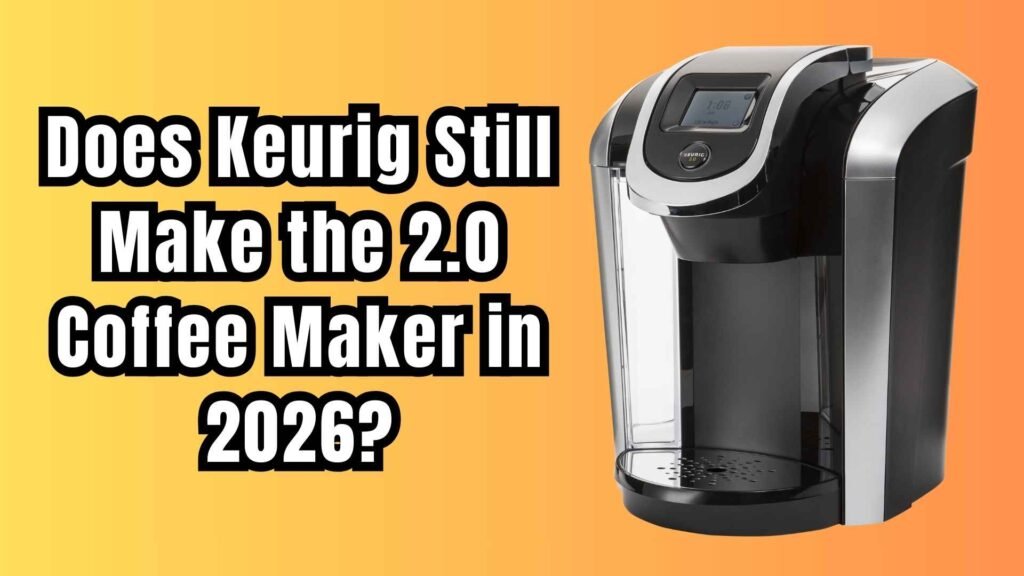
No—Keurig does not still make or sell the Keurig 2.0 coffee maker as a current production line in 2026. Keurig’s own support messaging indicates the 2.0 machines are no longer sold, and most major retailers list 2.0 units as “discontinued” or unavailable.
That said, you can still find Keurig 2.0 brewers as used, refurbished, or “new old stock” through marketplaces and third-party sellers—just buy carefully.
Does Keurig Discontinued Keurig 2.0 Coffee Machines in 2026?
What “Keurig 2.0” actually was
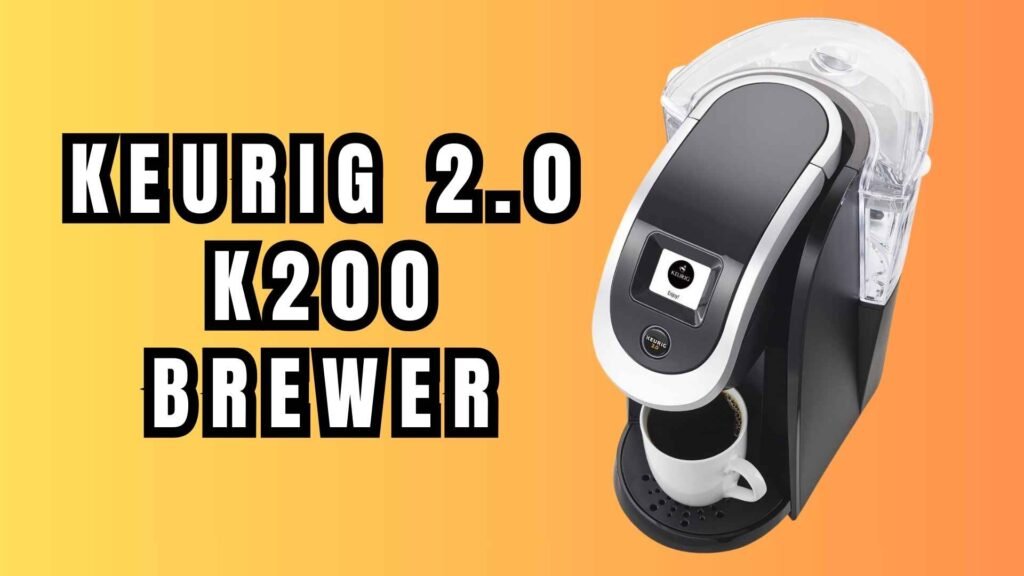
“Keurig 2.0” wasn’t one single brewer—it was a family of models (like the K200/K250 and others) promoted as a more advanced system with more size options and (in some models) carafe brewing using special pods. In Keurig’s 2015 rollout messaging, the company highlighted that the K200 could brew “both a single cup and a four-cup carafe.”
Why people still search it today:
- Touchscreen interface and multiple sizes
- Some versions supported K-Carafe™ pods
- You’ll still see them in listings as “Keurig 2.0 K200 / K250 / K500 series,” etc.
The most reliable sign: Keurig treats 2.0 as a legacy/discontinued line
The clearest indicator is that Keurig’s own support messaging states it no longer sells Keurig 2.0 machines.
On the retail side, it’s common to see 2.0 units labeled “Discontinued” or “Currently unavailable,” which aligns with “not in current production.”
Quote (Keurig press release, historical context): the K200 “has the ability to brew both a single cup and a four-cup carafe.”
What you can still find in 2026: used, refurbished, or new-old-stock
Even when a product line is discontinued, it can stay visible online for years.
Common ways the Keurig 2.0 still shows up:
- Used (local listings / resale marketplaces)
- Refurbished (third-party reconditioned units)
- New old stock (unused units sitting in a warehouse or liquidation channel)
What that means for you:
- Price can be attractive
- Return policies and warranty coverage may be limited or seller-dependent
- You may need to be more careful about pod compatibility and parts availability
How to confirm a listing is truly a 2.0 model (and not mislabeled)
Because sellers sometimes use “2.0” loosely, it helps to verify details.
Quick ID checklist (micro-checks)
- Look for model naming like: K200, K250, K300, K400, K500, K550, K560, etc. (often paired with “2.0” or “Plus Series”)
- Touchscreen / digital display is common on many 2.0-era models
- Mentions of K-Carafe™ or K-Mug® pods strongly suggest a 2.0/Plus-style unit
Support & parts in 2026: what to expect
Even discontinued machines can have “afterlife support” (manuals, basic troubleshooting, limited parts).
A key thing many buyers miss: Keurig’s own documentation stresses that pod choice can affect function and warranty outcomes. For example, the K200 use & care guide states that only Keurig-branded pods/accessories “will guarantee” proper functioning—and that issues from non-Keurig pods/accessories may not be covered.
Practical takeaway:
If you’re buying a 2.0 secondhand in 2026, treat it like buying an older appliance:
- Prioritize sellers offering returns
- Expect to clean/descale immediately
- Don’t assume the same hassle-free compatibility as newer models
Why Keurig 2.0 disappeared (and why it matters for buyers)
The “pod recognition” / lockout controversy
A major part of the Keurig 2.0 story is pod recognition—the brewer scanned pods for Keurig markings, limiting third-party pods.
Quote (The Verge, describing the mechanism): it “scans each pod for Keurig’s markings and locks out any unapproved capsules.”
This is also described in legal filings discussing “scanner technology” designed to ensure the brewer accepted only Keurig-made or licensed portion packs.
Customer backlash and marketplace confusion
When compatibility becomes confusing, shoppers hesitate—and it can create long-term frustration for owners who just want affordable pods. This is one reason many consumers gravitated toward later lines that emphasized simpler compatibility and clearer messaging.
Keurig shifted focus to newer platforms and sustainability-driven innovation
Keurig has continued rolling out newer systems and ideas (for example, more eco-focused pod concepts like K-Rounds paired with newer machines).
Whether or not you buy into each innovation, it’s a sign the company’s attention is on newer platforms, not reviving the 2.0 lineup.
Keurig 2.0 vs modern Keurig brewers in 2026: what changed?
Here’s a shopper-friendly comparison using a popular current single-serve model and a current single-serve + carafe style model.
| Feature | Keurig 2.0 (ex: K200 family) | Keurig K-Elite (current single-serve) | Keurig K-Duo Plus (single-serve + carafe) |
|---|---|---|---|
| Status in 2026 | Discontinued / legacy line | Current retail model | Current retail model |
| Brew types | Single cup + (some) carafe via K-Carafe pods | Single-serve K-Cup brewing | Single-serve + carafe (ground coffee) |
| Controls | Touchscreen on many models | Button controls, modern features | Modern controls + carafe workflow |
| Pod compatibility | Can be stricter due to recognition system | Broad K-Cup ecosystem | Uses K-Cups for single + grounds for carafe |
Buyer-friendly summary:
- If you want the idea of 2.0 (options + convenience) without legacy headaches, newer models usually make life easier.
- If you specifically want older 2.0 features (or you already own one), you can still make it work—just go in with realistic expectations.
If you already own a Keurig 2.0 in 2026: practical tips that keep it running
Pod and beverage compatibility: keep it simple
- Follow the brewer’s on-screen beverage selections (coffee vs HOT COCOA/OTHER) where applicable—this is built into the K200-style interface.
- Use pods that are clearly compatible—Keurig documentation emphasizes that non-Keurig pods/accessories can affect performance and warranty outcomes.
Hot cocoa pods still exist (and yes, you can brew them)
Keurig continues to sell hot cocoa K-Cup options (including Swiss Miss and others) through its beverage catalog.
Pro tip for cocoa lovers (micro-tip)
Hot cocoa mixes can leave more residue than coffee. If your machine has a hot-water function, running a quick rinse cycle after cocoa helps keep needles and exit paths cleaner (and many user guides emphasize extra caution with cocoa-style pods).
When to replace instead of repair
If you’re troubleshooting repeatedly (leaks, pump noise, inconsistent temps), the cost of time + parts can outweigh the savings of keeping an older unit alive. In that case, upgrading to a current model can be a quality-of-life win—especially for households brewing multiple cups daily.
Where to buy a Keurig 2.0 in 2026 (and avoid buyer regret)
Best places to look
- Refurbished sellers with return windows
- Reputable marketplaces with buyer protection
- Local pickup (so you can test)
“Don’t buy unless…” checklist (micro-checks)
- Seller confirms it heats and brews a full cup
- Water reservoir, drip tray, and pod holder are included
- No error messages on startup
- Return policy is clear (even short is better than none)
Quick risk table: buying used 2.0 vs buying new
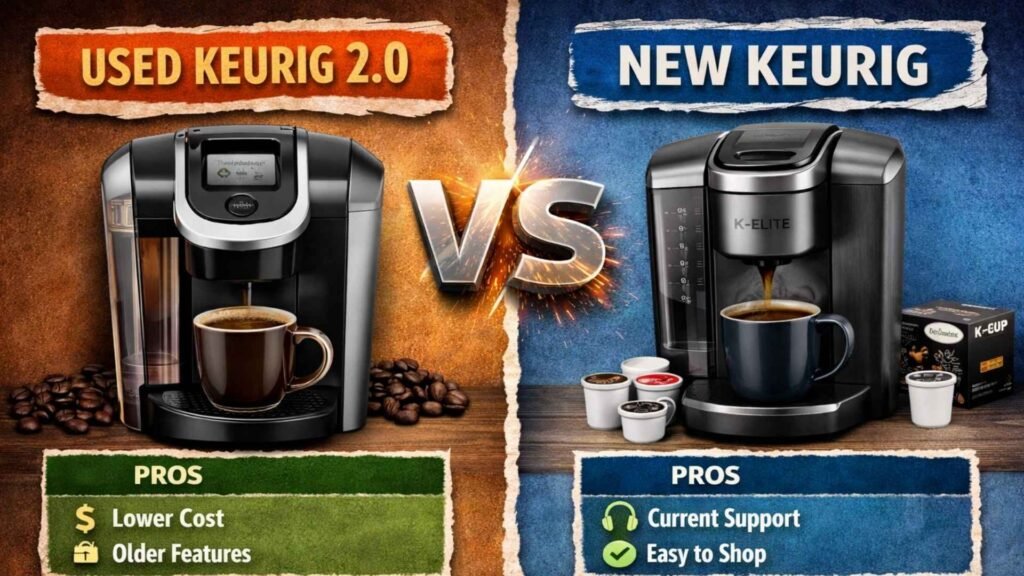
| Option | Pros | Cons |
|---|---|---|
| Used/Refurb Keurig 2.0 | Lower upfront cost; familiar older features | Discontinued status; higher risk; compatibility quirks |
| New current Keurig | Current support path; easier shopping; modern ecosystem | Higher price |
FAQ: Keurig 2.0 in 2026 (quick, straightforward)
Does Keurig still sell the Keurig 2.0 on its official site in 2026?
Keurig’s own support messaging indicates the 2.0 line is no longer sold.
Can I still buy a Keurig 2.0 coffee maker in 2026?
Yes—but typically as used, refurbished, or “discontinued” retail listings, not as a mainstream new model.
Are Keurig 2.0 models the same as “Keurig Plus Series”?
Many 2.0-era brewers are grouped under “Plus Series” naming in documentation and listings, often with touchscreen controls and multiple sizes.
Do Keurig 2.0 machines require special pods?
Many 2.0/Plus brewers used pod recognition and were designed to accept Keurig-made or licensed packs.
Does Keurig make hot cocoa pods/cups?
Yes. Keurig sells hot cocoa K-Cup pods through its beverage catalog (including Swiss Miss varieties).
Does Keurig make sugar-free hot chocolate?
Keurig sells hot cocoa options, and you can find lower-sugar varieties (for example, reduced-calorie cocoa offerings). For truly “sugar-free,” check nutrition labels—availability depends on brand and retailer.
Are K-Carafe pods still a thing?
K-Carafe pods were part of the 2.0 concept (single cup + carafe brewing). If you see them, availability is usually limited compared to standard K-Cups.
What’s the closest modern alternative to a Keurig 2.0 with carafe capability?
A popular modern approach is a single-serve + carafe machine like the K-Duo Plus, which supports both workflows without relying on the old 2.0 pod system.
If I find a “new” Keurig 2.0 listing, is it safe to buy?
It can be—if it’s genuinely unopened “new old stock.” But verify the return policy and confirm all parts are included, because it’s still a discontinued line.
Why did Keurig move away from 2.0?
One major factor was the controversy around pod lockout/recognition, widely described as a DRM-like approach.
In 2026, Keurig does not still make the Keurig 2.0 as a current production coffee maker. You can still find 2.0 units used or refurbished, but the smartest move is to buy with eyes open: confirm model numbers, expect legacy quirks (especially around pods), and compare the total value against newer Keurig brewers that are actively supported and easier to shop for.