If you love coffee (and you probably do if you’re reading coffeemakerusa.com), it’s normal to wonder whether your usual cup is a good idea right after giving blood. Blood donation temporarily reduces your circulating fluid volume and removes iron-containing red blood cells. That’s why donation centers focus on hydration, a snack, and taking it easy—especially if you’re prone to feeling lightheaded. Understanding how coffee (caffeine, acidity, and timing) fits into recovery helps you avoid dizziness, support iron replenishment, and get back to your routine safely.

In most cases, yes—coffee can be safe after donating blood, as long as you feel well, you’ve had fluids and a snack, and you keep coffee moderate. However, guidance varies: some blood organizations advise avoiding or limiting caffeine for the rest of the day to prioritize hydration and reduce the chance of feeling faint, while others are comfortable with moderate caffeine intake. The safest approach is to hydrate first, then have a small or decaf coffee later if you feel normal.
Coffee After Donating Blood: What’s Happening in Your Body?
Your blood volume is temporarily lower
A whole-blood donation removes a meaningful amount of fluid, and your body needs time (and liquids) to rebalance. That’s why donor aftercare instructions consistently emphasize extra fluids and rest.
Lightheadedness risk is highest soon after donation
Some donors feel dizzy, shaky, hot, or nauseous after donation. If that happens, standard guidance is to stop activity, sit or lie down, and drink fluids.
Caffeine can “feel stronger” when you’re a bit depleted
Caffeine may increase alertness and can raise heart rate in some people. If you’re already borderline lightheaded from donation, a strong coffee can make symptoms feel worse—not because coffee is “toxic,” but because your body is still stabilizing.
Is It Safe to Drink Coffee After Donating Blood?
When coffee is usually OK
Coffee is generally fine later the same day if all of these are true:
You’ve done the basics first
- You drank water/fluids and had a snack at the donor center
- You feel steady when standing and walking
- You’re not actively sweating, shaky, or nauseous
You keep it moderate
A small cup (or a weaker brew) is a safer “first coffee” than a large, high-caffeine drink.
When it’s smarter to wait (or go decaf)
Some blood donation organizations explicitly recommend avoiding caffeine after donation while you rehydrate and recover, especially during the first several hours.
Wait on coffee if you:
- feel dizzy or faint
- haven’t eaten yet
- tend to be caffeine-sensitive
- are dehydrated, sleep-deprived, or stressed
Best Timing: When Should You Have Your First Cup?

The practical “lowest-risk” timeline
Most donors do best with this sequence:
0–2 hours after donation
- Prioritize water + snack
- Avoid rushing, overheating, heavy lifting, or intense activity
2–6 hours after donation
- If you feel normal: you can consider a small coffee or half-caf
- Keep a water bottle nearby and sip regularly
Later the same day / next morning
- If no symptoms: your usual coffee routine is typically fine
- Still, hydration and regular meals matter
Hydration and Caffeine: Will Coffee Dehydrate You After Donation?
Coffee isn’t usually dehydrating—but donation recovery is different
Caffeine can increase urination, but for typical amounts, research summaries (including Mayo Clinic) note that the fluid in caffeinated drinks generally balances the diuretic effect for most people.
“Most research suggests that the fluid in caffeinated drinks balances the diuretic effect…”
That said, after donating blood, you’re in a situation where max hydration is the goal, and some donor organizations recommend focusing on non-caffeinated fluids for the rest of the day.
Who should be extra cautious with caffeine?
- People who rarely drink caffeine (less tolerance)
- Anyone who already feels “off” after donating
- People who plan to walk in heat, travel, or be very active soon after donation
Iron, Recovery, and Coffee: The Overlooked Issue (Iron Absorption)
Blood donation reduces iron stores
Each donation removes iron along with red blood cells. The American Red Cross notes donors can lose hundreds of milligrams of iron per donation and that replacing iron can take months, which is why they discuss iron intake/supplementation for frequent donors.
Coffee can reduce non-heme iron absorption (plant-based iron)
Coffee is a known inhibitor of non-heme iron absorption (the type found in beans, lentils, spinach, fortified cereals). Classic human studies show a cup of coffee can significantly reduce non-heme iron absorption from a meal.
What this means for donors (simple strategy)
You don’t have to quit coffee—just time it better, especially if you’re rebuilding iron:
Best practice timing
- Keep coffee/tea away from iron supplements by at least 1–2 hours
- If you’re eating an iron-focused meal, consider drinking coffee after (not with) it
- Pair non-heme iron foods with vitamin C (citrus, bell peppers, tomatoes) to improve absorption
A Quick Table: Coffee Choices After Donation
| Situation | Best drink choice | Coffee advice |
|---|---|---|
| You feel a little lightheaded | Water + electrolyte drink | Skip coffee until fully normal |
| You feel fine but haven’t eaten | Water first, then snack | Wait; coffee on an empty stomach can feel harsher |
| You want coffee soon | Water first | Choose small/half-caf/decaf |
| You’re focusing on iron recovery | Water + iron-friendly meal | Don’t drink coffee with the iron meal |
Coffee Options That Are Gentler Post-Donation
Decaf: best “comfort coffee”
Decaf still feels like your routine but minimizes stimulant effects. Note: decaf can still contain compounds that affect non-heme iron absorption, so timing around iron still matters.
Half-caf or smaller servings
If you brew at home, an easy win is simply less caffeine per cup:
- smaller mug
- weaker brew (slightly more water-to-coffee ratio)
- half-caf blend
Avoid “high-caffeine” traps
Be cautious with:
- energy drinks
- large cold brews (often higher caffeine than expected)
- multiple espresso shots back-to-back
Red Flags: When Coffee (and Activity) Should Wait
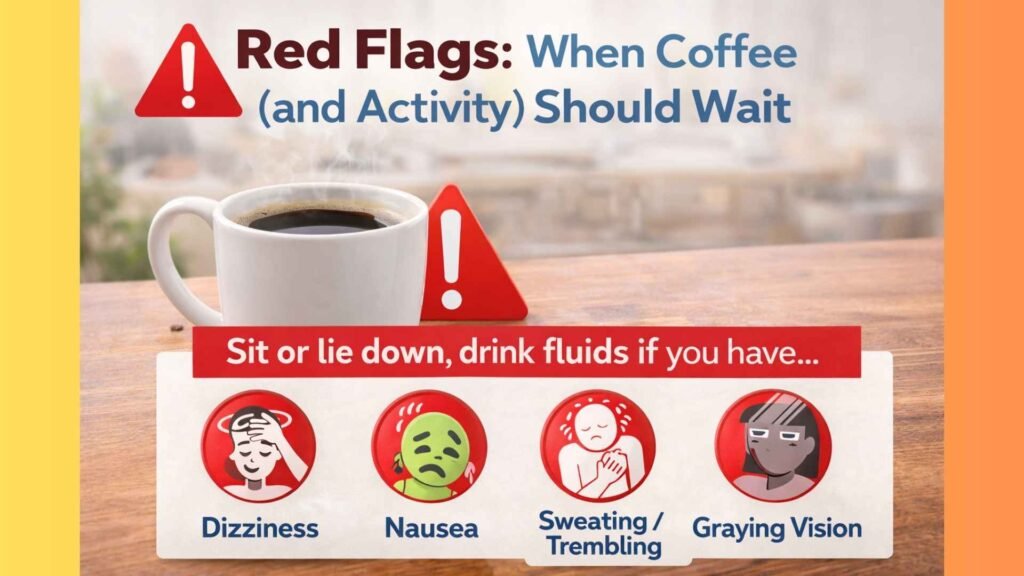
If any of these happen, treat it as a recovery moment:
- dizziness/lightheadedness
- nausea, sweating, trembling
- vision “graying out”
- feeling faint when standing
What to do: sit or lie down immediately and drink fluids; don’t resume normal activity until symptoms resolve. Seek medical help if symptoms persist or worsen.
Donor-Friendly Checklist (Coffee Lover Edition)
- Drink extra fluids after donation (water first).
- Eat a snack/meal before you reach for coffee.
- If you want coffee, start with small / half-caf / decaf.
- Avoid coffee right next to iron supplements or iron-rich meals.
- If you feel faint: stop, lie down, fluids—coffee later.
FAQ: Coffee After Donating Blood
1) Can I drink coffee immediately after donating blood?
It’s better to hydrate and snack first. If you feel even slightly dizzy, wait. Some donor organizations advise avoiding caffeine the rest of the day to prioritize hydration.
2) How long should I wait before my first coffee?
A cautious window is 2–6 hours, after water and food, assuming you feel normal. If you’re sensitive to caffeine, wait longer or choose decaf.
3) Does coffee dehydrate you after donation?
Usually, moderate coffee isn’t dehydrating for most people, but after donation your priority is extra fluids—so don’t let coffee replace water.
4) Is decaf safer than regular coffee after donating?
Decaf reduces stimulant effects (jitters, rapid heartbeat). It can be a good “comfort cup” while you focus on hydration and recovery.
5) Can coffee affect iron recovery after donating blood?
Yes—coffee can reduce non-heme iron absorption, especially when consumed with iron-rich meals or supplements. Separate coffee from iron by 1–2 hours.
6) What’s better right after donation: coffee or an electrolyte drink?
An electrolyte drink (or water) is usually better immediately after donation, especially if you’re prone to lightheadedness.
7) Can I drink a latte after donating blood?
Yes if you feel well, but consider timing: dairy calcium can also interfere with iron absorption when taken together. If you’re emphasizing iron, have the latte away from iron supplements/meals.
8) What if coffee makes me feel dizzy after donating?
Stop drinking it, sit or lie down, and hydrate. Persistent dizziness should be assessed by a clinician, especially if you faint.
9) Does the advice differ by donation type (whole blood vs plasma/platelets)?
Yes—centers may give different hydration and diet guidance depending on what you donated. Follow your donor center’s aftercare instructions first.
10) Should I avoid coffee for 24 hours after donating?
Some organizations recommend that, while others allow moderate caffeine. If you want the safest universal approach: avoid or minimize caffeine the rest of the day, hydrate well, then return to normal the next day.
For most healthy donors, coffee after donating blood is generally safe—but timing and moderation matter. Put water + snack first, and only have coffee once you feel steady. If you’re rebuilding iron stores (especially as a frequent donor), avoid drinking coffee with iron-rich meals or supplements. When in doubt—or if you feel dizzy—skip coffee, hydrate, rest, and follow your donation center’s guidance.


0 Comments