Drinking coffee after a tooth extraction sounds simple, but it is one of the most common questions coffee lovers ask after dental surgery. If you start every morning with coffee, skipping it can feel harder than the extraction itself. Still, the first few days after a tooth removal matter. Your mouth needs a stable blood clot to protect the socket, reduce bleeding, and support healing. This topic is important for anyone who has had a tooth pulled, especially wisdom tooth patients, daily coffee drinkers, people with caffeine headaches, and anyone worried about dry socket.
You should avoid hot coffee right after a tooth extraction, especially during the first 24 to 48 hours. Hot drinks may increase bleeding, irritate the extraction site, or disturb the blood clot. Coffee does not directly cause dry socket in every person, but hot coffee, suction from straws, dehydration, and poor aftercare can raise the risk. Wait until bleeding stops, choose lukewarm or room-temperature coffee, skip straws, and follow your dentist’s instructions.
You may like reading: Coffee after Wisdom Tooth Extraction
Drinking coffee after a tooth extraction: what you need to know
After a tooth extraction, your body forms a blood clot inside the empty socket. That clot works like a natural bandage. It protects the exposed bone and nerves while new tissue begins to form. If the clot breaks down, dissolves too early, or comes out, you may develop dry socket, a painful healing problem. The American Dental Association’s MouthHealthy site explains that dry socket happens when the clot over the socket is displaced, leaving bone and nerves exposed.
Why hot coffee is the main concern
Hot coffee can be rough on a fresh extraction site. Heat may increase blood flow to the area, trigger bleeding, and irritate tender tissue. According to the NHS dental surgery recovery guide, you should avoid hot food and drinks for 2 days after dental surgery because they could cause bleeding.
That does not mean coffee is banned forever. It means timing, temperature, and how you drink it matter.
Why the first 24 hours matter most
The first day is the clot-protection window. During this time, dentists commonly tell patients to avoid rinsing hard, spitting, smoking, using straws, drinking alcohol, and taking hot drinks. These actions can disturb the clot or increase bleeding. Bupa Dental Care advises avoiding straws for the first 24 hours because they can dislodge the clot, which is needed to prevent bleeding and infection.
Coffee is not the same as water
Coffee is a comfort drink, not a healing drink. Water should be your first choice after extraction. Cool water helps hydration without heat, acidity, sugar, or caffeine. If you miss coffee badly, you can usually bring it back slowly once your dentist’s early aftercare window has passed.
Can I drink coffee after tooth extraction?
Yes, many people can drink coffee after a tooth extraction, but not immediately and not hot. A safer plan is to avoid coffee during the first 24 hours, avoid hot coffee for 48 hours when possible, and restart with lukewarm or room-temperature coffee only if bleeding has stopped and pain is improving. People with wisdom tooth removal, surgical extraction, stitches, heavy bleeding, swelling, or dry socket risk may need to wait longer.
A simple coffee timeline after extraction
| Time after extraction | Coffee guidance | Safer choice |
|---|---|---|
| First 3 hours | Avoid eating or drinking until your dentist allows it. | Rest, gauze pressure, follow instructions. |
| First 24 hours | Avoid hot coffee and avoid straws. | Cool water, soft foods, dentist-approved fluids. |
| 24 to 48 hours | Avoid hot drinks if bleeding or soreness continues. | Lukewarm drinks, water, soft meals. |
| After 48 hours | Some people can try lukewarm coffee carefully. | Small cup, no straw, sip slowly. |
| Days 3 to 5 | Watch for dry socket symptoms. | Call dentist if pain worsens. |
| After 5 to 7 days | Many people tolerate coffee better. | Return gradually if healing is normal. |
Room-temperature coffee may be safer than hot coffee
If your dentist allows it and bleeding has stopped, room-temperature coffee may be less irritating than hot coffee. Do not drink it through a straw. Suction can pull at the clot and may raise dry socket risk.
Iced coffee after tooth extraction: is it safe?
Iced coffee may seem safer because it is cold, but it still needs caution. Very cold drinks can feel uncomfortable on sensitive teeth and tissue. Also, many people drink iced coffee through a straw, which is a problem after extraction. If you drink iced coffee, use a cup and sip gently. Do not use a straw.
Read: coffee-after-teeth-whitening
Can I Drink Coffee After a Tooth Extraction?
Use this quick tool to check when coffee may be safer after tooth removal, wisdom tooth extraction, or dental surgery. It helps you understand hot coffee risks, dry socket warnings, straw safety, and better drink choices during healing.
This tool is educational only. Always follow your dentist or oral surgeon’s instructions first.
Readiness
Check
Answer a few questions below and get a simple safety result.
Coffee readiness calculator
Your result
Choose your extraction timing, drink type, and symptoms. The tool will show whether coffee looks safer, risky, or better to avoid right now.
Coffee after tooth extraction timeline
Protect the blood clot. Avoid hot coffee, straws, alcohol, and vigorous rinsing.
Hot drinks may still irritate the socket. Choose water and soft foods first.
If bleeding stopped, a small lukewarm coffee may be easier to tolerate.
Dry socket pain often appears during this window. Watch for worsening pain.
Many people return gradually, but wisdom tooth patients may need more time.
Can I drink it after tooth extraction?
Click a drink below for a quick safety note.
Safe vs avoid drinks after tooth extraction
| Drink | Early healing advice | Why it matters |
|---|---|---|
| Cool water | Best first choice | Hydrates without heat, acidity, suction, or irritation. |
| Hot coffee | Avoid for 24–48 hours | Heat may irritate the socket and may restart bleeding. |
| Lukewarm coffee | Try later if healing is normal | Less irritating than hot coffee, but still needs caution. |
| Iced coffee | Only without straw | Cold may be okay, but straw suction can disturb the clot. |
| Alcohol | Avoid | Can slow healing and may interact with medication. |
| Soda or fizzy drinks | Avoid early | Carbonation and acidity may bother the extraction site. |
Recovery checklist before drinking coffee again
Myths about coffee after tooth extraction
Coffee advice after dental surgery gets confusing because people hear different tips from friends, family, and online forums. Let’s clear up the common myths.
Myth 1: Coffee always causes dry socket
Coffee itself does not always cause dry socket. The bigger concerns are hot temperature, suction from straws, dehydration, smoking, vigorous rinsing, and disturbing the clot. Cleveland Clinic says dry socket happens when the blood clot does not form or gets knocked loose, exposing bone and nerves. It also advises skipping warm or fizzy drinks while healing.
Myth 2: I can drink coffee if I use a straw
This is one of the worst ideas after extraction. A straw creates suction in your mouth. That suction can disturb the clot. If you want coffee later in recovery, drink from the cup.
Myth 3: Decaf coffee is always safe right away
Decaf has less caffeine, but it can still be hot, acidic, or irritating. The temperature matters more than the caffeine during the first healing window. Decaf coffee is not a free pass during the first 24 hours.
Myth 4: Hot coffee helps pain
Hot coffee may feel comforting, but heat can increase bleeding early after surgery. Use cold packs on the outside of the face if your dentist recommends them. Mayo Clinic notes cold packs may help the first day after tooth removal, while warm packs may help after the first day.
Myth 5: If the pain is gone, the socket is fully healed
Pain relief does not always mean the socket is fully healed. Dry socket pain often starts a few days after extraction. Guy’s and St Thomas’ NHS Foundation Trust says dry socket usually happens 3 to 5 days after treatment and may include increasing pain, bad taste, and bad breath.
Risks and complications of drinking coffee too soon
Drinking coffee too early may not cause a problem for everyone, but it can increase discomfort or interfere with early healing in some cases.
Dry socket risk
Dry socket is the complication most people fear after tooth extraction. It happens when the protective blood clot is lost or does not form well. Without that clot, bone and nerves can become exposed, causing severe pain.
“Dry socket is a painful condition.”
Warning signs of dry socket
Call your dentist if you notice:
- Pain that gets worse after day 2 or 3
- Pain that spreads to your ear, temple, jaw, or eye
- Bad breath
- Bad taste
- Empty-looking socket
- Visible bone
- Pain that does not improve with normal pain medicine
Bleeding
Hot coffee may increase bleeding in the early healing stage. Dental surgery recovery guidance from Guy’s and St Thomas’ NHS Foundation Trust recommends avoiding hot food and drinks for 2 days because they could cause bleeding.
Irritation and sensitivity
Coffee is naturally acidic. A fresh socket is tender. Even lukewarm coffee may sting some people, especially if the extraction was difficult or close to sensitive gum tissue.
Dehydration concerns
Caffeine can increase urination in some people, especially if they are not regular coffee drinkers. After extraction, hydration matters. Water supports comfort, saliva flow, and general recovery. Coffee should not replace water.
Sleep problems after surgery
Your body heals better when you rest. Too much caffeine late in the day can make sleep harder. Poor sleep may make pain feel worse and leave you more tired during recovery.
Medication concerns
Coffee may not mix well with how you feel on pain medicine, antibiotics, or sedatives. It may worsen jitters, nausea, stomach upset, or heartburn in sensitive people. Always follow your dentist’s instructions, especially if you were prescribed medication.
Pros and cons of coffee after tooth removal
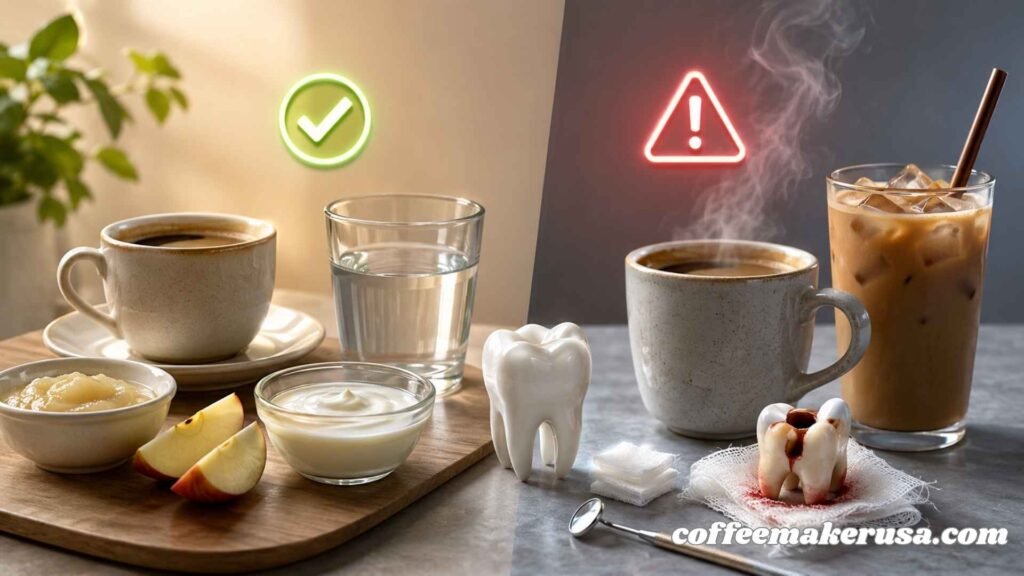
Coffee is not all bad after extraction. It just needs the right timing.
| Pros | Cons |
| May reduce caffeine-withdrawal headache in daily coffee drinkers. | Hot coffee may increase bleeding early. |
| Can improve alertness once recovery is stable. | Caffeine may worsen jitters or anxiety. |
| Decaf or lukewarm coffee may satisfy cravings. | Coffee acidity may irritate the socket. |
| May help daily routine feel normal. | Drinking through a straw can disturb the clot. |
| Can be enjoyed again once healing improves. | Too much caffeine can affect sleep and hydration. |
When coffee may help
If you drink coffee every day, stopping suddenly may cause a headache, low mood, or fatigue. A small lukewarm coffee later in recovery may help you feel normal again. The FDA notes that up to 400 mg of caffeine per day is not generally linked with dangerous negative effects for most healthy adults, but sensitivity varies from person to person.
When coffee may hurt
Coffee may hurt recovery if it is hot, taken too soon, consumed through a straw, loaded with sugar, or used instead of water. It may also be a bad idea if you still have bleeding, swelling, severe pain, nausea, or medication side effects.
Who may drink coffee after tooth extraction?
Some people may return to coffee earlier than others. It depends on the extraction type, healing progress, and dentist instructions.
Lower-risk coffee drinkers
You may be able to restart coffee carefully if:
- Your extraction was simple.
- Bleeding has stopped.
- Pain is mild and improving.
- You are not using a straw.
- You can drink it lukewarm or room temperature.
- Your dentist did not give stricter instructions.
- You are not feeling dizzy, nauseous, or overly sensitive.
Higher-risk patients who should wait longer
You should be more cautious if:
- You had wisdom teeth removed.
- You had a surgical extraction.
- You have stitches.
- You smoke or vape.
- You take blood thinners.
- You use hormonal birth control.
- You have a history of dry socket.
- You have uncontrolled diabetes or healing problems.
- You still have bleeding or swelling.
- You are taking strong pain medication.
Cleveland Clinic notes that dry socket affects about 2% to 5% of all tooth extractions and is more common after wisdom teeth removal.
Safe ways to drink coffee after dental extraction
When you bring coffee back, do it gently.
Step 1: Wait for bleeding to stop
Do not rush coffee while the site is still bleeding. Keep biting on gauze as directed and follow your dentist’s aftercare plan.
Step 2: Start with lukewarm coffee
Hot coffee is the problem. Let your coffee cool until it is lukewarm or room temperature.
Step 3: Skip the straw
Drink straight from the cup. Do not use a straw for iced coffee, cold brew, smoothies, or any drink until your dentist says it is safe.
Step 4: Keep it simple
Avoid very sugary coffee, whipped cream, sticky syrups, or acidic add-ins at first. A simple small coffee is easier on your mouth.
Step 5: Drink water too
Have water before and after coffee. This helps keep your mouth comfortable and reduces dry mouth.
Step 6: Stop if it hurts
If coffee causes stinging, throbbing, bleeding, or a bad taste, stop and switch to water. Call your dentist if symptoms continue.
Best drinks after tooth extraction
Coffee can wait. Healing drinks should be gentle, cool, and easy to sip.
Better drink choices
- Cool water
- Milk
- Non-acidic juice, if tolerated
- Oral rehydration drinks
- Smoothies eaten with a spoon
- Lukewarm broth after the early window
- Decaf lukewarm coffee later, if approved
Drinks to avoid early
- Hot coffee
- Hot tea
- Alcohol
- Carbonated drinks
- Energy drinks
- Citrus juices
- Drinks through a straw
- Very spicy or acidic drinks
MedlinePlus advises people with dry socket not to smoke, use tobacco, or drink alcohol, and it stresses following dentist instructions after a tooth is pulled.
Coffee after wisdom tooth extraction
Wisdom tooth removal often needs more caution than a simple extraction. The sockets may be larger. Surgery may involve stitches, swelling, and a longer healing period. Dry socket is also more common after wisdom teeth removal.
When to drink coffee after wisdom teeth removal
A cautious approach is to wait at least 48 to 72 hours before trying lukewarm coffee. Some people may need to wait 5 to 7 days, especially after impacted wisdom teeth, heavy swelling, or dry socket risk.
Why wisdom tooth patients should be careful
The back of the mouth is harder to keep clean. Food and liquid can pool near the area. Chewing, swallowing, and mouth movement may irritate the socket. Keep your diet soft and follow your oral surgeon’s instructions closely.
Coffee after extraction with stitches
If you have stitches, do not assume coffee is safe right away. Stitches help close tissue, but the socket still needs gentle care. Hot liquids can still irritate the area or increase bleeding.
Safer approach with stitches
- Follow the surgeon’s timeline.
- Avoid hot coffee for at least 48 hours.
- Choose lukewarm coffee only when allowed.
- Do not swish coffee around the mouth.
- Avoid chewing near the surgical site.
- Call your dentist if stitches loosen or bleeding restarts.
Caffeine withdrawal after tooth extraction
Daily coffee drinkers may feel withdrawal when they suddenly stop caffeine.
Common caffeine-withdrawal symptoms
- Headache
- Fatigue
- Irritability
- Brain fog
- Low mood
- Sleepiness
How to handle caffeine cravings safely
If your dentist says to avoid coffee, ask whether a small amount of caffeine from another source is acceptable. You may be able to use a dentist-approved, non-hot, non-carbonated option. Do not use energy drinks because they can be acidic, fizzy, and high in caffeine.
What to eat with coffee after extraction
Never drink coffee on an empty, irritated stomach if you are taking pain medicine. Pair it with soft food when you restart it.
Soft foods that pair better with coffee later
- Yogurt
- Scrambled eggs
- Oatmeal that is not hot
- Applesauce
- Mashed potatoes
- Smooth nut-free pudding
- Soft pasta
- Lukewarm soup after the early healing window
Avoid crunchy toast, chips, nuts, seeds, popcorn, spicy food, and anything that can get stuck in the socket.
When to call your dentist
Coffee should not cause major pain. If symptoms change suddenly, get help.
Call your dentist if you have:
- Heavy bleeding that does not slow
- Pain that gets worse after day 2 or 3
- Fever
- Swelling that keeps increasing
- Pus or strong bad taste
- Bad breath with severe pain
- Visible bone in the socket
- Trouble swallowing or breathing
- Reaction to medication
Do not try to treat dry socket by packing the socket yourself. A dentist can clean the area and place a dressing if needed. Guy’s and St Thomas’ NHS guidance says dry socket can be treated by washing the area and placing an antiseptic dressing.
FAQs about drinking coffee after a tooth extraction
Can I drink coffee 24 hours after tooth extraction?
You may need to wait longer, especially if the coffee is hot. Many people should avoid hot drinks for 24 to 48 hours. Try lukewarm coffee only if bleeding has stopped and your dentist allows it.
Can coffee cause dry socket?
Coffee itself does not always cause dry socket. Hot coffee, straws, suction, smoking, and poor aftercare can disturb the blood clot. That clot protects the socket while it heals.
Is iced coffee safe after tooth extraction?
Iced coffee may be safer than hot coffee, but only without a straw. Sip gently from a cup. Avoid it if cold drinks cause pain or your dentist told you to avoid coffee.
When can I drink hot coffee after tooth extraction?
Many patients should wait at least 48 hours before hot drinks. If you had wisdom teeth removed, stitches, bleeding, or swelling, wait longer and follow your dentist’s advice.
Can I drink decaf coffee after tooth extraction?
Decaf has less caffeine, but it can still be hot and acidic. Avoid it during the first 24 hours. Later, lukewarm decaf may be a gentler choice than regular hot coffee.
Can I drink coffee with milk after tooth extraction?
Yes, later in recovery, if it is lukewarm and you drink from a cup. Milk may make coffee gentler, but temperature and timing still matter.
Can I drink cold brew after tooth extraction?
Cold brew may be less acidic than some hot coffee, but avoid straws. Try a small amount only after bleeding stops and early aftercare restrictions pass.
Why does coffee hurt after tooth extraction?
Coffee may sting because the socket and gum tissue are tender. Heat, acidity, and caffeine can also irritate the area. Stop drinking it if pain or bleeding starts.
What should I drink instead of coffee after extraction?
Choose cool water first. You can also try milk, non-acidic juice, or dentist-approved electrolyte drinks. Avoid alcohol, fizzy drinks, hot drinks, and straws early.
Can I drink coffee after wisdom tooth extraction?
Wait longer after wisdom tooth removal. A cautious timeline is 48 to 72 hours for lukewarm coffee, and longer for hot coffee. Ask your oral surgeon if your case was complex.
Summary
Drinking coffee after a tooth extraction is mostly about protecting the blood clot. Hot coffee too soon can irritate the socket, increase bleeding, and possibly raise dry socket risk. Coffee does not need to disappear from your life, but it should wait until early healing is stable. Avoid coffee during the first 24 hours, avoid hot coffee for about 48 hours when possible, skip straws, drink water, and restart with a small lukewarm cup only if bleeding has stopped. If you had wisdom teeth removed, stitches, heavy swelling, or a history of dry socket, wait longer and follow your dentist’s instructions. Your morning coffee can come back, but your healing socket comes first.



0 Comments