For many coffee lovers, the ritual of brewing a fresh pot each morning is sacred. But what happens when your coffee maker starts giving off a musty smell, has black spots inside the water reservoir, or brews coffee that just tastes “off”? These are classic signs of mold growth — a problem that’s more common than most people think and can impact both your health and your brew quality. Understanding whether vinegar kills mold in coffee makers is crucial for every home barista who wants safe, clean coffee and a machine that lasts.
Maintaining a clean coffee maker isn’t just about aesthetics — mold and bacteria can thrive in the warm, damp environment of your brewer, especially if water sits in the reservoir or you haven’t cleaned for months.
Quick Answer:
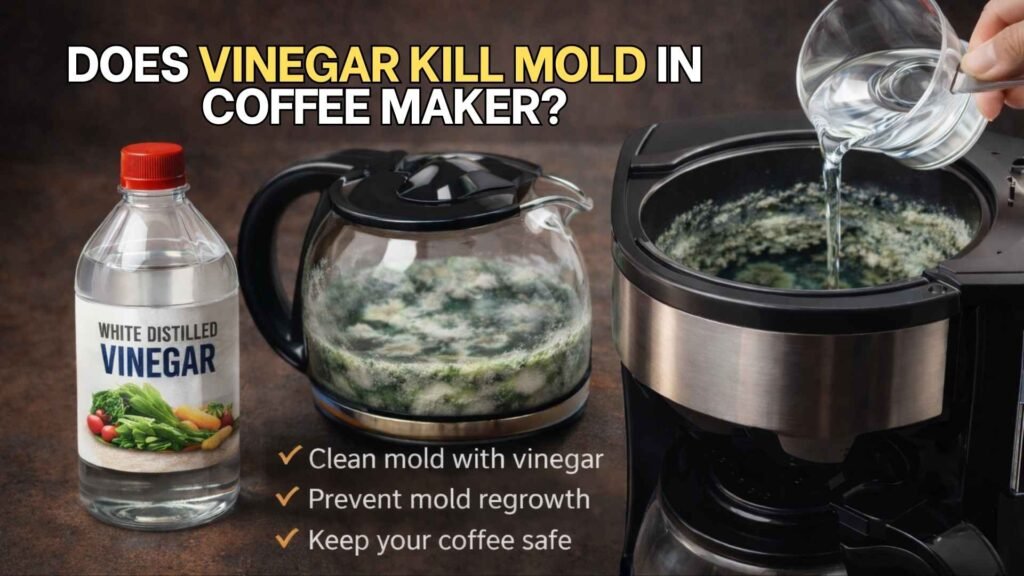
Yes — white distilled vinegar can kill many types of mold in coffee makers, thanks to its acidic nature (acetic acid) that disrupts mold cell walls and creates an environment where mold can’t thrive. Vinegar also helps remove mineral buildup and descaling contaminants, making it a popular natural cleaning solution. However, it’s most effective when used properly as part of a cleaning routine and may not eliminate every mold species in severe infestations.
Why Mold Grows in Coffee Makers — and Why It Matters
What Makes Coffee Machines Mold Magnets
Coffee makers naturally create ideal conditions for mold:
- Warm and moist internal environments — perfect for fungal growth.
- Leftover water and condensation — stagnation invites spores.
- Coffee oils and organic residue — fuel for mold.
Even if you don’t see mold, spores could be lurking inside tubes, under seals, or along the water path.
Health Risks of Mold in Coffee Makers
Mold isn’t just gross — it can impact your health:
- Allergic reactions — sneezing, coughing, headaches.
- Respiratory irritation — especially for sensitive individuals.
- Unpleasant tastes or odors in brewed coffee.
Because of these risks, tackling mold isn’t optional — it’s essential for safe daily brewing.
How Vinegar Works Against Mold — The Science Explained
The Role of Acetic Acid
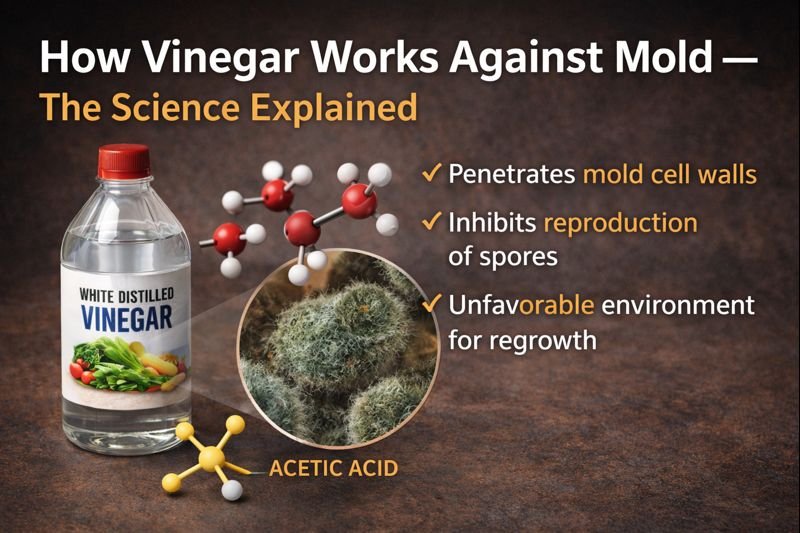
White distilled vinegar contains acetic acid, which makes it acidic enough to:
- Penetrate mold cell walls
- Inhibit reproduction of spores
- Create an unfavorable environment for regrowth
This is why vinegar is often recommended as a natural, food‑safe cleaning agent.
Effectiveness & Limitations
While vinegar is effective for many common mold types, it may not eliminate all kinds of mold — especially in severe infestations or deeply embedded spots. In such cases, repeated cleanings or other solutions might be needed.
Step‑by‑Step: Cleaning a Moldy Coffee Maker With Vinegar
Here’s the correct way to use vinegar to kill mold and thoroughly clean your coffee machine:
Supplies You’ll Need
- White distilled vinegar
- Fresh water
- Paper filters
- Dish soap
- Soft cloth or brush
Vinegar Cleaning Process
- Prepare the solution
Mix equal parts white vinegar + water and pour into the water reservoir. - Start a brew cycle
Run until half the solution fills the carafe. - Pause and soak
Turn off the machine and let the mixture sit for 30–60 minutes. This gives the vinegar time to break down mold and minerals. - Finish the cycle
Brew the remainder, then discard the solution. - Rinse thoroughly
Run 2–3 cycles with clean water to remove vinegar residue. - Clean removable parts
Wash the carafe and filter basket with warm, soapy water. - Dry completely
Allow everything to air dry before reassembly — moisture invites more mold.
Vinegar vs Other Cleaning Methods
| Cleaning Method | Pros | Cons |
|---|---|---|
| White Vinegar | Natural, safe, inexpensive, kills many molds | Strong smell, may not kill all mold types |
| Commercial Cleaners | Formulated for coffee makers | May contain harsh chemicals, cost more |
| Baking Soda | Mild abrasive, good for carafe stains | Not as strong against mold spores |
| Hydrogen Peroxide | Strong oxidizer | Must be used cautiously |
Other Ways to Prevent Mold Growth
Daily Habits
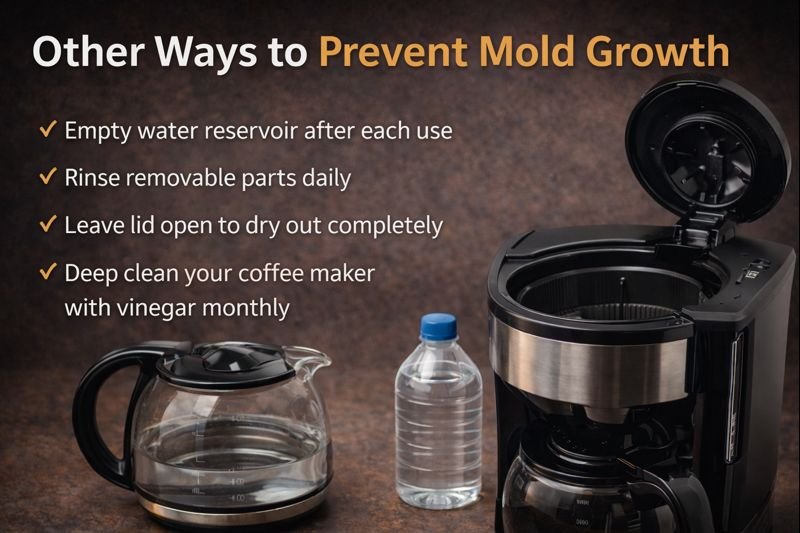
- Empty the water reservoir after each use.
- Rinse removable parts daily.
- Leave lids open after use to dry completely — fungal spores hate light and airflow.
Periodic Maintenance
- Deep clean with vinegar at least once a month if used daily.
- Use filtered water to reduce mineral buildup.
FAQs — Quick Answers to Common Questions
Can I use apple cider vinegar instead of white vinegar?
You can, but white distilled vinegar is stronger, cheaper, and less likely to leave residue or smell.
How often should I clean my coffee maker to prevent mold?
Most experts recommend monthly deep cleaning for daily users.
Can mold in my coffee maker make me sick?
Yes — mold spores can cause allergic reactions and respiratory issues in sensitive individuals.
Is vinegar enough to kill all mold?
Vinegar works for many molds but may not eliminate every spore type in heavy infestations.
Can I use bleach to clean my coffee maker instead?
Bleach is not recommended — it can leave harmful residues and does not reach deep mold.
My coffee still tastes like vinegar after cleaning. What can I do?
Run extra rinse cycles with plain water until the smell disappears.
Can I clean a Keurig or single‑serve with vinegar?
Yes — use the same vinegar solution and multiple rinse cycles, but check your manual first.
Will vinegar damage my coffee maker?
Not usually, but some manufacturers do not recommend vinegar, so always check the manual first.
Does descaling with vinegar remove mold?
Descaling helps clean mineral buildup and often removes mold simultaneously if done thoroughly.
Can I mix vinegar with baking soda?
It creates fizz but neutralizes the acidity, reducing mold‑killing effectiveness — better to use them separately. (Common cleaning chemistry principle)
Final Thoughts: Clean Coffee Starts Here
Keeping your coffee maker free of mold isn’t just about taste — it’s about health, hygiene, and longevity of a machine you rely on every day. Vinegar offers a natural, cost‑effective way to tackle mold and buildup, but like any method, proper application and regular maintenance are key. Whether you’re brewing your first cup or your tenth, a clean coffee maker ensures every sip is as fresh and safe as possible.
By understanding how vinegar works — and when it’s most effective — you can keep your coffee maker mold‑free and your mornings better than ever.



0 Comments